


Excess inventory is one of the most persistent and costly problems in retail. Seasonal shifts, demand forecasting errors, supplier overruns, and product returns all contribute to stockpiles of goods that are no longer moving through standard sales channels. Storing unsold inventory consumes warehouse space, ties up working capital, and accelerates depreciation for time-sensitive product categories. Discounting through the primary storefront erodes brand perception and trains customers to wait for markdowns. That’s why retailers across categories are increasingly turning to liquidation platforms as a structured, scalable alternative for converting surplus stock into recovered revenue.
What Is a Liquidation Platform?
A liquidation platform is a digital marketplace designed specifically for selling excess, returned, or end-of-life inventory through competitive bidding or bulk purchase mechanisms. Buyers on these platforms are typically resellers, wholesalers, discount retailers, and small business owners who purchase goods at below-retail prices and redistribute them through their own channels. In other words, the platform creates a secondary market that extends the commercial life of inventory that would otherwise be written off or destroyed.
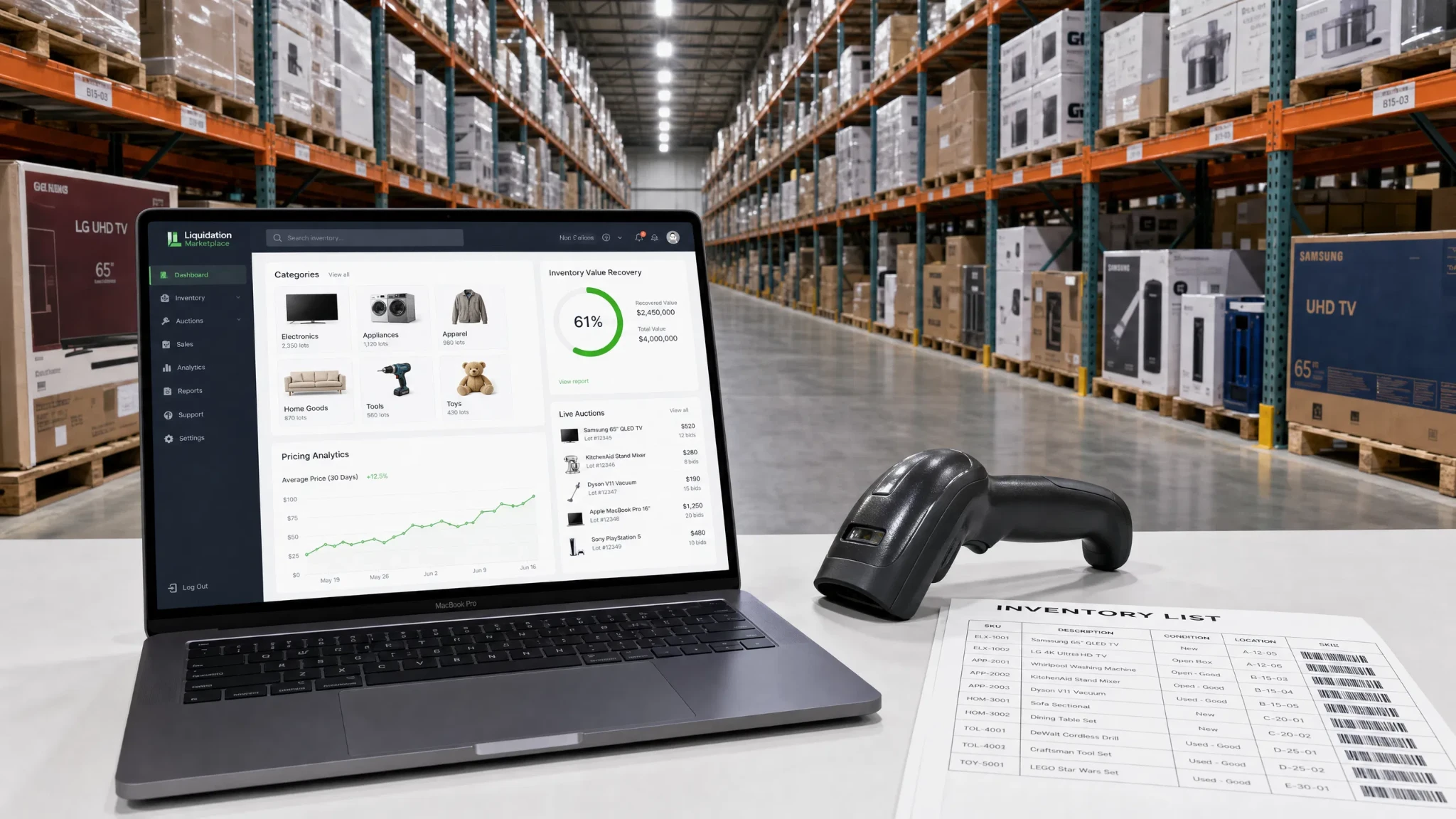
The technology underpinning these platforms varies in sophistication. Purpose-built liquidation auction software handles the core mechanics of lot creation, bidder registration, real-time bidding, payment collection, and buyer communications within a single system. This is significantly more efficient than managing liquidation through manual negotiations or generic marketplace listings, where pricing is inconsistent and buyer reach is limited.
When Does a Liquidation Platform Make Sense?
Here’s when a liquidation platform can enter the game: when standard clearance channels are no longer sufficient to move inventory volume at an acceptable recovery rate. Retailers with predictable surplus cycles, such as those operating in fashion, consumer electronics, home goods, or seasonal categories, benefit most from having a systematic liquidation channel in place before overstock becomes a crisis.
You should attentively analyze whether the following scenarios apply to your operation:
- Seasonal inventory remains unsold after the primary selling window closes
- Returned goods accumulate faster than they can be restocked or refurbished
- Warehouse costs for holding excess stock are eroding margin on active product lines
- Off-price discounting on the main storefront is negatively affecting brand positioning
- The business lacks a reliable buyer network for large-volume secondary sales
The majority of retailers who move to platform-based liquidation report that the structured auction process consistently outperforms bulk disposal to a single broker, because competitive bidding among multiple buyers drives recovery rates upward.
How Liquidation Platforms Generate Value
Competitive Bidding Increases Recovery Rates
The fundamental mechanism that makes liquidation platforms effective is competition among buyers. When multiple resellers bid on the same lot, the final price reflects actual market demand rather than a single buyer’s opening offer. More engaged buyers create more competition, and more competition directly raises the recovery value for the seller. This is the core advantage over negotiated bulk sales, where the retailer has limited leverage once a single buyer is in the room.
From a financial perspective, even a modest improvement in recovery rate across high-volume liquidation cycles can represent significant annual savings. A retailer moving several million dollars of surplus inventory per year through a structured auction platform rather than single-buyer disposal may recover an additional ten to twenty percent of cost value, depending on category and buyer demand.
Lot Flexibility Attracts a Broader Buyer Pool
Liquidation platforms allow retailers to structure inventory into lots of varying sizes and compositions. Large wholesalers may bid on full truckload lots, while smaller resellers compete for pallet quantities or single-category lots. This flexibility expands the addressable buyer market considerably. Thanks to this, retailers are not dependent on a small number of large liquidators and can access buyers who specialize in specific product categories and pay accordingly.
Transparent Process Reduces Operational Burden
Managing liquidation through direct broker negotiations or ad hoc marketplace listings requires significant staff time. A purpose-built platform automates the majority of the process, including lot publishing, buyer communication, bid tracking, payment collection, and post-auction documentation. What is also important here is that the transparent bidding record provides an auditable trail, which simplifies financial reporting and compliance for publicly traded or regulated retailers.
What Reliable Liquidation Auction Software Should Have
Not all platforms offer the same capabilities. When evaluating options, you should look for the following as a minimum standard:
- Lot management tools supporting bulk import, category tagging, and image attachment
- Flexible auction formats including timed auctions, buy-now pricing, and sealed-bid options
- Bidder verification and tiering to control access for trusted buyers versus new registrants
- Real-time bidding engine with automatic extension to prevent last-second sniping
- Integrated payment processing with support for deposit holds and bulk payment terms
- Buyer communication automation covering outbid alerts, winning notifications, and pickup instructions
- Reporting dashboard tracking recovery rates, buyer activity, and lot performance over time
Pay attention to integration capabilities. The most widely used options support API connections to warehouse management systems (WMS) and ERP platforms, which enables automatic lot creation from surplus inventory records without manual data entry.
How to Structure a Liquidation Program with a Platform
Step 1: Segment Inventory Before Listing
Not all excess inventory should be treated the same way. We recommend categorizing surplus stock by condition (new, open-box, damaged), category, and estimated resale value before creating lots. Well-organized lots with accurate condition descriptions and clear photos attract more serious bidders and reduce post-sale disputes significantly.
Step 2: Build and Qualify a Buyer Network
A liquidation platform is only as effective as the buyers participating in it. It will be helpful to actively recruit resellers and wholesalers in relevant product categories before the first auction cycle. A qualified buyer pool of even fifty to one hundred active bidders can produce competitive outcomes across most lot types.
Step 3: Set Appropriate Reserve Prices
Reserve prices, the minimum acceptable bid below which a lot will not sell, should be set based on realistic secondary market values rather than cost or retail price. Setting reserves too high relative to market will result in unsold lots and delayed recovery. Apart from this, consistently unsold lots reduce buyer engagement over time, as bidders lose confidence that auctions will close.
Step 4: Review Performance and Optimize Lot Structure
After each auction cycle, analyze recovery rates by category and lot size. These mechanics boost long-term results: adjusting lot compositions based on what buyer segments actually compete for leads to progressively better recovery rates across subsequent cycles.
Conclusion
Liquidation platforms give retailers a structured, repeatable channel for converting excess inventory into recovered revenue without sacrificing brand integrity on the primary storefront. First of all, competitive bidding among a broad buyer pool consistently outperforms single-buyer disposal negotiations. Secondly, platform automation reduces the operational overhead of managing liquidation at scale, freeing teams to focus on forecasting and prevention rather than crisis disposal.
The retailers that build liquidation into their inventory management strategy as a planned channel, rather than a reactive measure, will recover more value per cycle and develop stronger buyer relationships over time. Choosing the right platform and structuring inventory thoughtfully are the two decisions that determine how much of that value is actually captured.