


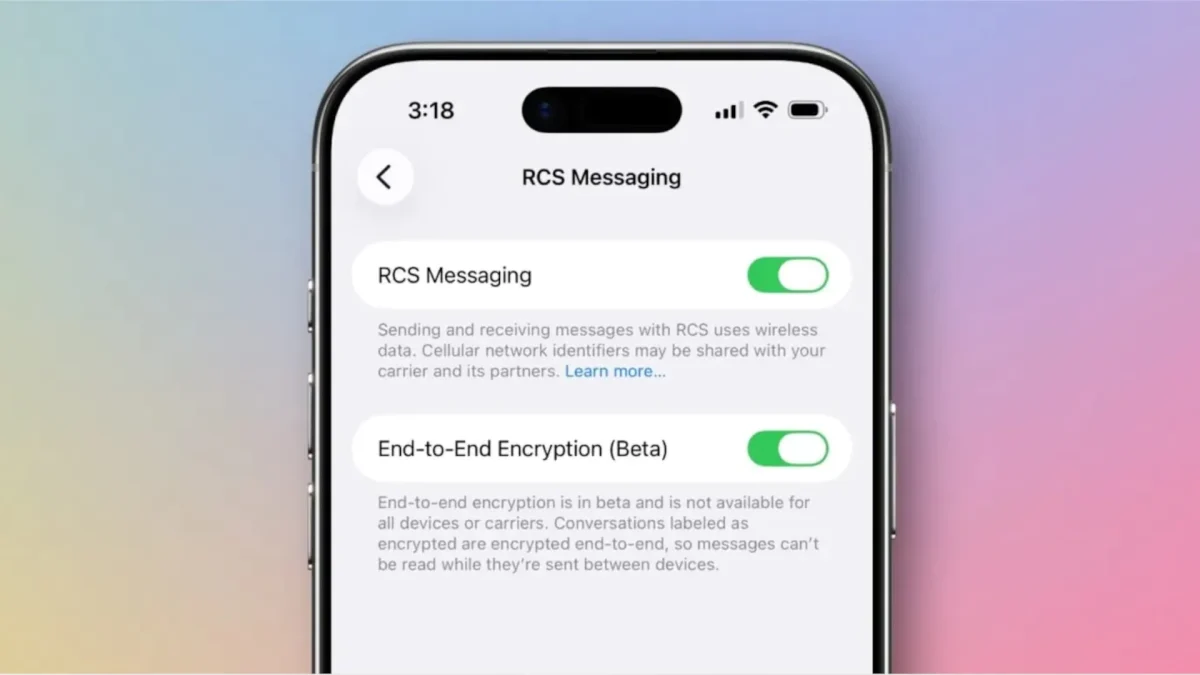

For years, messages between iPhone and Android have traveled without any type of encryption, exposed to carriers and any third party in the chain. With the first beta of iOS 26.5, Apple has reintroduced end-to-end encryption for RCS conversations with Android. On paper, those messages could no longer be intercepted. The function is activated by default in Settings, within the RCS messaging options, and when it is active a lock appears in the conversation.
The problem is that we have seen it before. Apple tested exactly this in the iOS 26.4 betas and retired it before the stable release. May it reappear in iOS 26.5 is a good signbut not a guarantee. The difference this time is that Apple has not included in the release notes any warning that the feature may not make it to the public version, something it did do with iOS 26.4. There is room for optimism, although with the lesson learned.
What does it take to make it work?
The requirement is clear: the iPhone needs the iOS 26.5 beta, and the Android must have the latest version of Google Messages. If both conditions are met and the operator also supports it, the lock appears. The encryption is supported by the GSMA RCS Universal Profile 3.0 standard and uses the MLS protocol, which the IETF finalized in 2023.
Still, there are nuances. Just because most operators support encryption does not mean that all of them do: if you don't see the padlock, your messages are not protected. It is worth keeping this in mind, especially considering that Apple has been announcing this advance since September 2024 and the actual implementation has been slow.
The gap is closing, but there is still a long way to go. And beyond encryption in RCS, interoperability between both platforms is also advancing on other fronts: AirDrop and Quick Share, for example, are beginning to be understood by the file sharing between devices.
Would you trust encrypted RCS messages to replace applications like WhatsApp or Signal, or do you think they arrive too late?