


Samsung has announced the ISOCELL HP5a new mobile sensor of 200 megapixels that seeks to squeeze more detail without gaining the camera module. The strategy is to reduce the size of the pixel at 0.5 micrometers in a 1/1.56 inches format. On paper, it is a striking figure that fits better in teleobjectives or periscopios than in a main camera. To counteract the loss of light of the small pixels, the brand incorporates its entire technological arsenal.
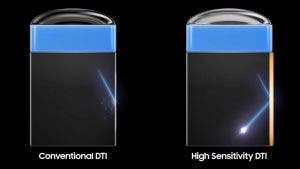
The keys are in a package of capture and processing techniques: FDTI (Front Deep Tank Isolation) and D -VTG (Vertical Dual Transfer Gate) to increase load capacity by pixel, and a structure DCC (Dti Center Cut) that opens part of the trench between photoreceptors To improve the approach and cut noise. One adds one high precision microlent and one Anti -reflective layer That tries to take advantage of each photon. On paper, the specifications are promising; However, it remains to be seen in real conditions.
On the other hand, Sony is also developing its own 200 MP sensor; We will have to see what the result is in the face of Samsung's proposal. The only clear thing is that a new competition begins to lead Premium mobile photography, between two brands that have always marked the pattern in this relevant section for the industry.
What does the ISOCELL HP5: 200 MP contribute in compact format
The HP5 keeps Samsung's recipe in high resolution with Tetra²pixel: depending on the light, fuse pixels to function to 50 MP with effective pixels of 1.0 µm OA 12.5 MP with 2.0 µm. Thus it gains sensitivity when lighting falls without giving up 200 MP when the scene allows. It also promises Semosa assisted by end of end to end Able to generate 200 MP images in less than two secondssomething relevant to reduce time between catches.
There are improvements in HDR: Smart iso Pro with 13 -bit color depth (more color combinations and better light control) and Staggered HDR To merge long, medium and short exhibitions. Focus by Super QPD (Pdaf)which distributes phase detection throughout the sensor, and an oxide insulation design that reduces interference between pixels. Everything is oriented to maximize color and dynamic range, despite the tiny pixel size.
Zoom and video: of the 2x increase in 6x sensor without loss
Like 200 MP, HP5 offers Zoom 2x in sensor with optical quality when cutting the complete matrix. The novelty is that Samsung talks about a “Zoom 6x without loss” When combining that cut with a 3x teleobjective. Its compact size allows more versatile settings: main + Teleobjective short or Teleobjective Periscopic without huge modules.
On video, the manufacturer points to recording from 8K to 30 fps, 4k to 120 fps and 1080p at 240 fps, figures in the line of its latest high -end sensors. On paper is not a resolution jump, but in efficiency and processing times, which should help keep the detail and the approach when combined with optical stabilization in the corresponding module.
ISOCELL HP5 Technical Card
- Resolution: 200 MP (16,384 x 12.288)
- Optical format: 1/1.56 inches
- Pixel size: 0.5 µm
- Binning tetra²pixel: 50 MP (1.0 µm) / 12.5 MP (2.0 µm)
- AF: Super QPD (Pdaf of the entire matrix)
- Capture technologies: FDTI, D -VTG, DCC (profit and noise improvements)
- Optics: High precision microlent and high -transmittance anti -reflective layer
- HDR: Smart iso Pro (13 bits, ~ 550,000 million colors) and Staggered HDR
- Processing: Righting from end to end (<2 sa 200 mp)
- Zoom: 2x in sensor; to a 6x zoom without loss combined with 3x teleobjective
- Video: up to 8k 30 fps; 4k 120 fps; 1080p 240 fps
When will we see it and what mobiles?
Here enters the least glamorous part: for its 0.5 µmthis sensor seems thought to Teleobjectives and periscopiosNot so much to replace the HP2/HP3 as the main camera in the high range. Some rumors point to what could be released in Chinese brands and not necessarily in the next Galaxy. If that use is confirmed in Teleobjectivesthe advantage will lie in offering effective zoom levels with thinner modules.
Beyond the theory, the key will be in the real results: will the improvements in isolation, microlent and processed to stop the noise and the fall of dynamic range Typical of the small pixel? Does this approach to the mobile zoom convince you or do you prefer larger sensors with less resolution? We read you in the comments.


