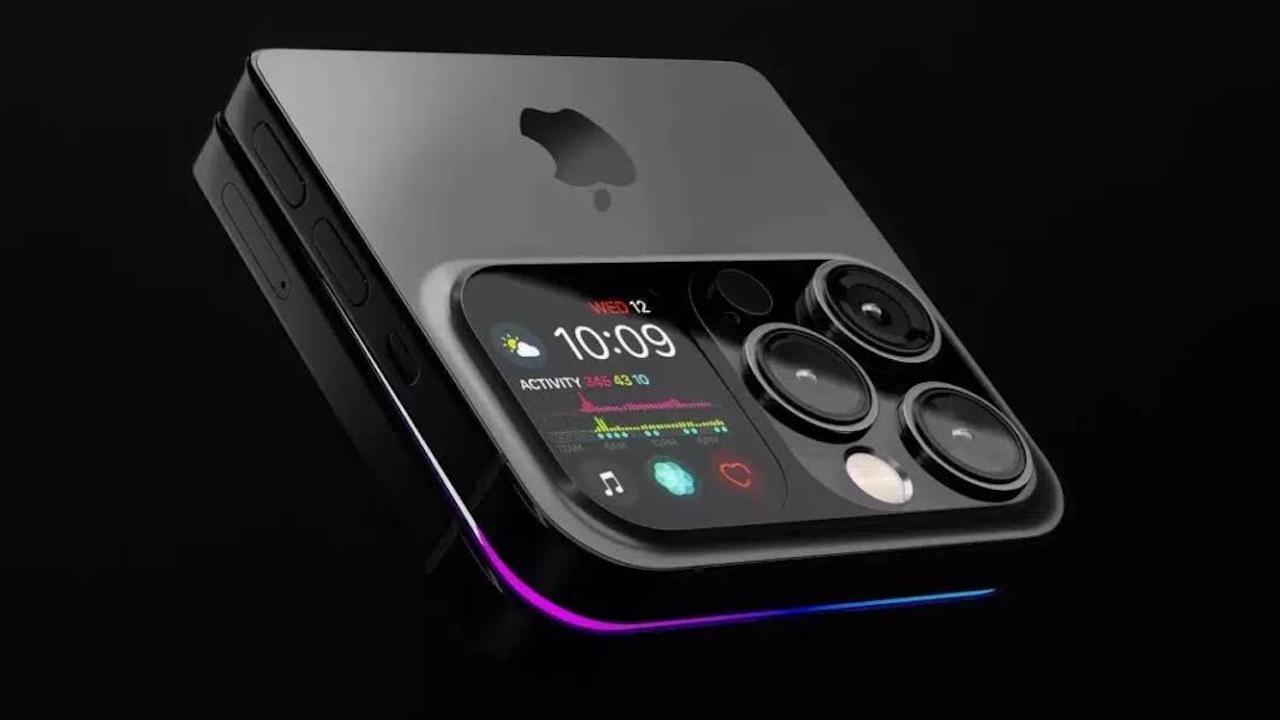
Seven years after Samsung launched the first Galaxy Fold, Apple has finally presented its first folding phone: the iPhone Duo. A curious name, because it was already used in 2020 with the MagSafe Duo charger, and because Microsoft also used it for a device that, in reality, were two screens joined by a hinge and not a real folding one. The Cupertino one is, with a “passport” type format – wide and short – very similar to the one that Samsung has adopted with the recent Galaxy Z Fold 8.
The starting price is $1,999 for the 256 GB version, with pre-sale on October 16 and availability from the 23rd. Apple assures that its approach is different from that of the rest of the manufacturers: instead of starting from two “glued” screens, they first designed the internal screen as if it were a miniature iPad, and from there they built the rest of the phone.
Touch ID returns, and the hinge promises to better hide the fold
One of the most commented details is the return of the Touch IDalmost ten years after Apple removed it from the iPhone. It makes sense: Face ID would need too much space on an external screen as small as this format. The sensor is integrated into the side power button, like on the iPad Air, while the volume control has been moved to the top, an unusual but understandable solution given how short the phone's body is.
For the screen, Apple has opted for a nano-textured finish which reduces reflections and hides the fold line, as well as a titanium plate under the panel—Samsung style—to improve rigidity. It's not magic: the crease is still there, it's just harder to see with the naked eye. He A20 Pro 2 nanometers, the same chip as the iPhone 18 Pro, is responsible for performance, with a vapor chamber to sustain it under demanding loads and its own C2 modem. The battery promises 31 hours of video on the internal screen and 44 on the outside, figures that equal those of conventional models.
iPhone Duo technical sheet
- Inside screen: tablet type, without official data on exact size or resolution
- Exterior screen: “passport” format, short and wide
- Performance: Apple A20 Pro (2nm), C2 chip (modem), vapor chamber
- Cameras: dual 48 MP system (main Fusion + ultra wide angle), 4K video at 120 fps in both
- Selfie: Center Stage cameras on indoor and outdoor display
- Security: Touch ID integrated into the side power button
- Battery: Up to 31 hours of video (indoor screen) / 44 hours (outdoor screen), charge to 50% in 20 minutes
- Storage: 256GB, 512GB, 1TB and 2TB
- Price: from $1,999 (256 GB)
- Availability: Pre-sale October 16, on sale from October 23
Software, the great unknown, and a direct rival already on the market
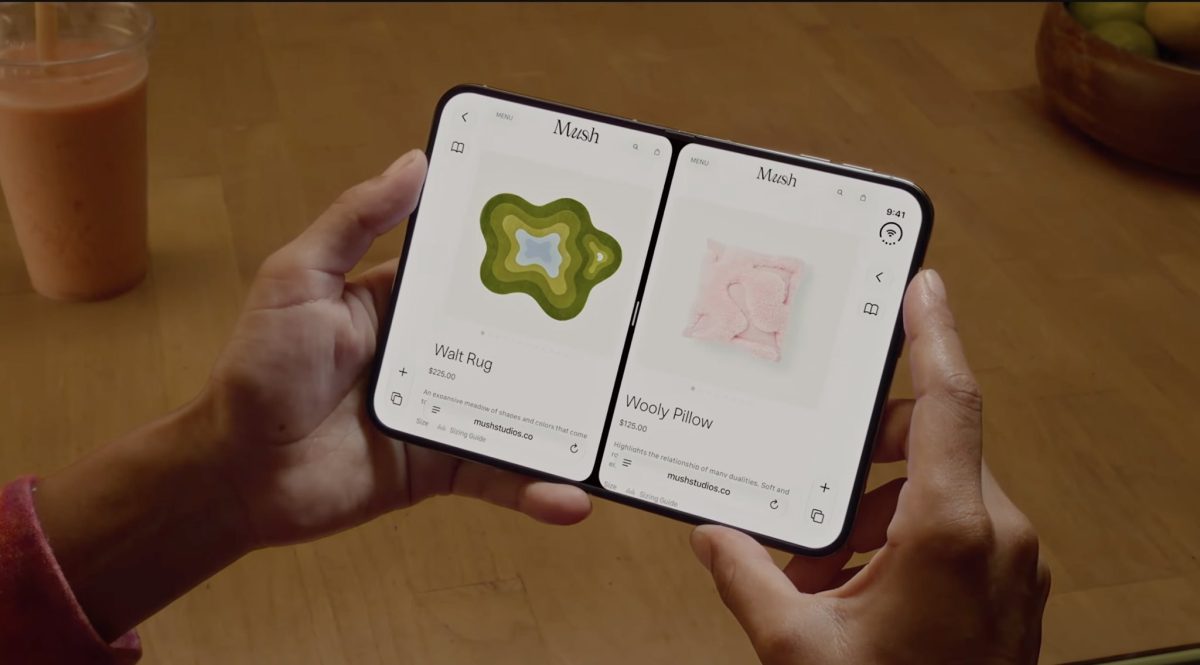
This is where Apple plays its cards more cautiously: it has incorporated features that Android has already offered for years, such as split-screen multitasking, tent mode and flex mode, the latter something that Samsung Curiously, it was removed from the Galaxy Z Fold 8 this year. Apps like Slack or Spotify will arrive already adapted to the new format, although it remains to be seen how many developers actually join the launch, something that on Android took a long time to take off.
The comparison with the Galaxy Z Fold 8 is inevitable: Samsung set its price at 1,999 euros in Europe, practically in the same range as Apple. The main difference is in the cameras —Apple is betting on only two sensors 48 megapixels compared to Samsung's triple system— and in a software ecosystem with years of experience in favor of Korean. The iPhone Duo may not bring huge technical surprises, but its mere arrival will force many more apps to be truly optimized for foldables, something that will also indirectly benefit Android.