The world of FPV drones has just received a monumental shake-up. DJI has officially presented the new DJI Avata 360a device that promises to merge the immersion of first-person flights with the amazing ability to record video in 360 degrees at 8K resolution. If you are one of those who enjoy creating aerial content, this release will surely have caught your attention, since on paper it seems like a huge generational leap compared to its predecessors.
However, it's not all engineering magic. Although their one inch sensors They promise spectacular image quality and their new dual lens mode gives a lot of versatility, there are certain details that force us to be cautious. As is often the case with the brand's most cutting-edge toys, the specifications dazzle, but they also make us wonder if the end user experience will justify the investment and technical limitations that come with pushing the resolution so far.
Two recording modes and a storage that knows little
The great asset of this drone is its ability to switch between a 360 lens mode, capable of capturing HDR video in 8K at 60fps and photos of 120 megapixelsand a classic single lens mode in 4K. This means you can record your entire environment in a single flight and then reframe the image in post-production, a marvel for content creators who don't want to miss a single angle.
But here comes the reality check: the device includes 42 GB internal storage. Although DJI boasts that this allows you to save about 30 minutes of video in maximum quality, we know that in serious productions that space will evaporate in the blink of an eye. Fortunately, it has high-speed transfer through Wi-Fi 6but you will have to empty the drone constantly if you do not have high-capacity memory cards.
DJI Avata 360 technical sheet
- Camera and Sensors: 2 sensors equivalent to 1 inch, dual lens format (360° and classic).
- Video Resolution: 8K at 60fps HDR (360° mode), 4K at 60fps (single lens mode).
- Photograph: Up to 120 megapixels.
- Transmission: O4+ system (1080p at 60fps live), range up to 20 km.
- Autonomy: Up to 23 minutes of flight.
- Security: Omnidirectional obstacle detection, integrated propeller guards.
- Price: From 459 euros (drone only), options with RC 2 controller from 719 euros.
Immersive flight, fair autonomy and availability
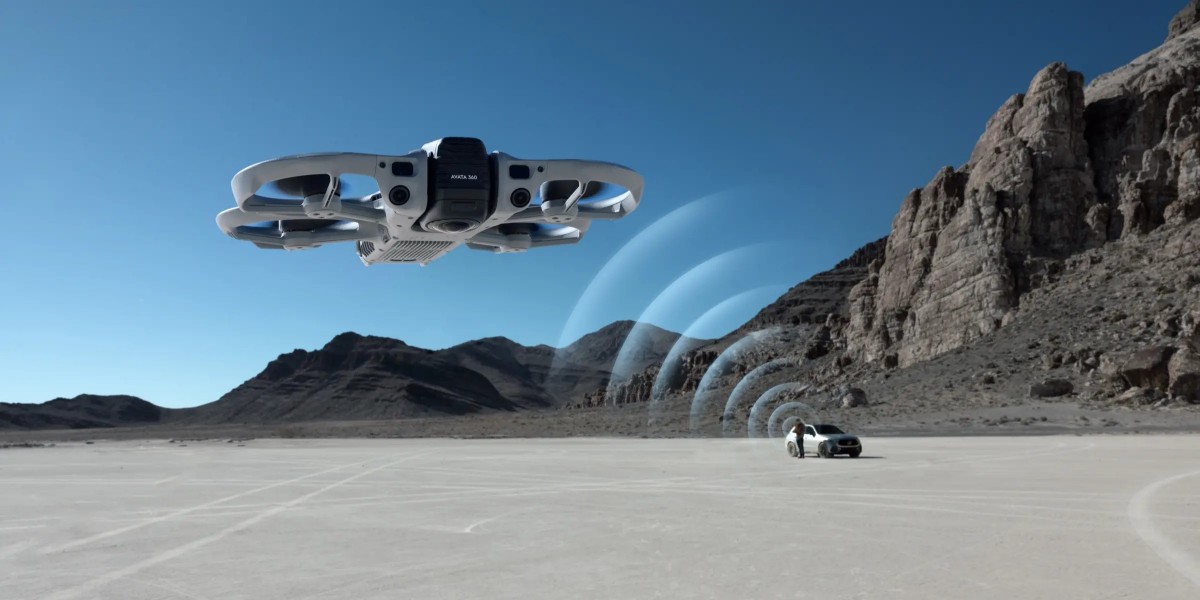
Regarding flight, the equipment integrates the O4+ transmissionwhich guarantees a live video signal at 1080p with a range of up to 20 kilometers. Added to its integrated propeller protectors and the omnidirectional obstacle detectionpromises to be a safe device even for the most daring pilots. Additionally, software tools such as Virtual Gimbal They allow almost infinite camera rotations.
However, moving so much technology comes at a price when you're in the air. The battery promises up to 23 minutes of autonomya figure that, realistically and in windy conditions or aggressive FPV flights, will probably be much shorter. It is the usual toll to pay for carrying two very high resolution sensors flying at full speed through the sky.
If despite these small shadows you are eager to get your hands on it, we have good news, since You can now book in Spain and shipments will begin next month. You can get just the drone for a few £409or raise the level with the remote DJI RC2 for 719 euros. If you need more batteries, the package Fly More with the RC2 costs 939 eurosexactly the same price as the Motion Fly More packagewhich includes the new DJI Goggles N3. With this range of prices on the table, are you willing to sacrifice some flight time to have the maximum immersive resolution in your aerial videos?