



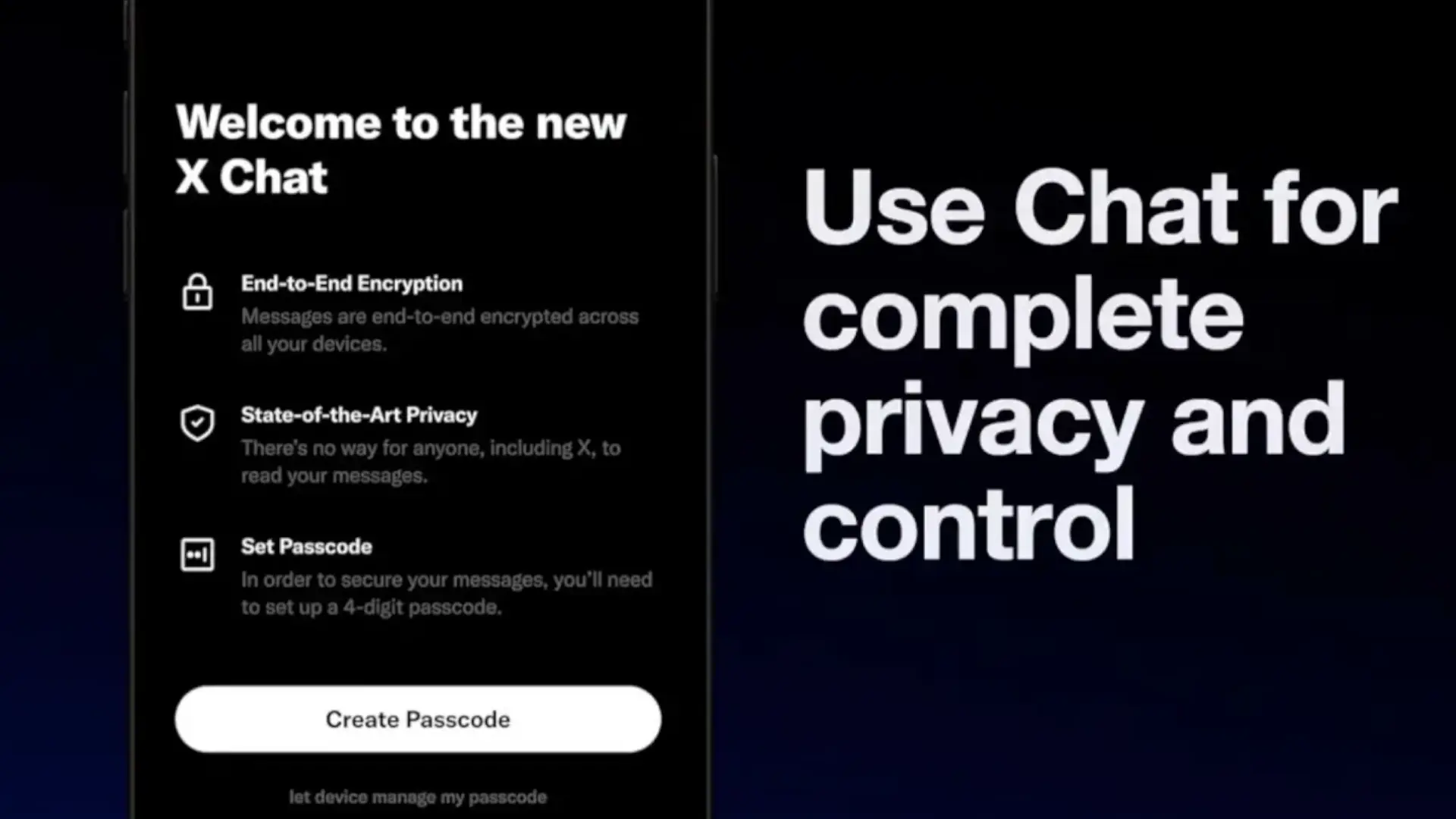

X, the social network formerly known as Twitter, launches Chat, a new messaging system that replaces classic direct messages and that promises conversations with end-to-end encryption (E2EE, “end-to-end encryption”)plus integrated voice and video calling. The rollout kicks off on iOS and the web version, while the Android app will also receive the feature later, with automatic migration of message history to the new encrypted environment.
With this move, Elon Musk's platform tries to make talking on X more like using a full messaging app like WhatsApp or Signal and not just as an additional tool for commenting on posts. The company already tested an encrypted messaging system in 2023, but stopped it in May to “improve” it. Now it returns with a renewed architecture, although with some relevant nuances about the real level of privacy offered to the user.
What changes with Chat compared to the usual direct messages (DM)
Say hello to Chat – all-new secure messaging on X.
• end-to-end encrypted chats and file sharing
• edit, delete, or make messages disappear
• block screenshots and get notified of attempts
• no ads. no tracking. total privacy. pic.twitter.com/7dmDEDkYvO— Chat (@chat) November 14, 2025
The most relevant change is that conversations and files sent via Chat become protected by end-to-end encryption, so that only the sender and receiver can read the content or open the attachments. This applies to groups as well, something the previous version of direct messages (DM, direct messages) did not completely cover, and brings X closer to what privacy-focused applications like Signal or Telegram already offer in their protected chats.
In addition to encryption, Chat incorporates features designed to offer more control over what you share: messages that disappear after a configurable time, editing and deleting already sent messages without leaving a visible trace, blocking screenshots and notifications when someone tries to take a screenshot. In addition, voice and video calls are incorporated, the sending of all types of files, lThe promise of voice notes in the futureand all without advertising or tracking within the Chat interface itself, as explained by the company.
Features of Chat on X
- End-to-end encryption for individual and group chats.
- Encryption also for files and shared multimedia content.
- Messages that disappear after a configurable timer.
- Editing and complete deletion of sent messages.
- Blocking screenshots and notifications of capture attempts.
- Integrated voice and video calls.
- Old message history migrated to Chat.
- Available on iOS and on the web; Android will arrive later.
- No ads or tracking within the Chat module, according to X.
Real privacy: what Chat encrypts and what remains unencrypted
Although the marketing focuses on full encryption, there are details to keep in mind. X reconoce que ciertos metadatos, como quién habla con quién, cuándo se envía cada mensaje o desde qué dispositivo, no están cifrados de extremo a extremo, algo que también sucede en otras plataformas y que puede ser muy revelador sobre tus hábitos de uso. Furthermore, for now there is no system to verify keys or devicesso a man-in-the-middle attack—or unauthorized access from within the company—could go unnoticed by users.
Unlike Signal, whose protocol is public and audited, X has not thoroughly detailed Chat's architecture, except for general comparisons with architectures inspired by the blockchain technologyleaving the security community without much technical information to review. That is to say, on paper it promises a lot, but until clear specifications are published it will be difficult to put it on par with solutions already consolidated in the world of secure messaging.
Availability on Android and whether it can replace your messaging app
At the moment, Chat is active for most users of iOS and web version of Xand will be deployed little by little through an update of the app. On Android, the company talks about an “upcoming” launch, integrated as another section in the sidebar next to Home, Communities or Premium, so all you have to do is update the application to see the new section appear.
In practice, Chat wants you to use integration of usernames. The proposal is promising, but it remains to be seen how it will work in the daily use of users. The challenge will be to convince users to trust the platform's privacy promise and migrate sensitive conversations to a service so closely linked to personal branding and public exposure. If you use Android, do you think you will give Chat a chance when it comes to the app or will you continue to rely on your usual messaging apps?


